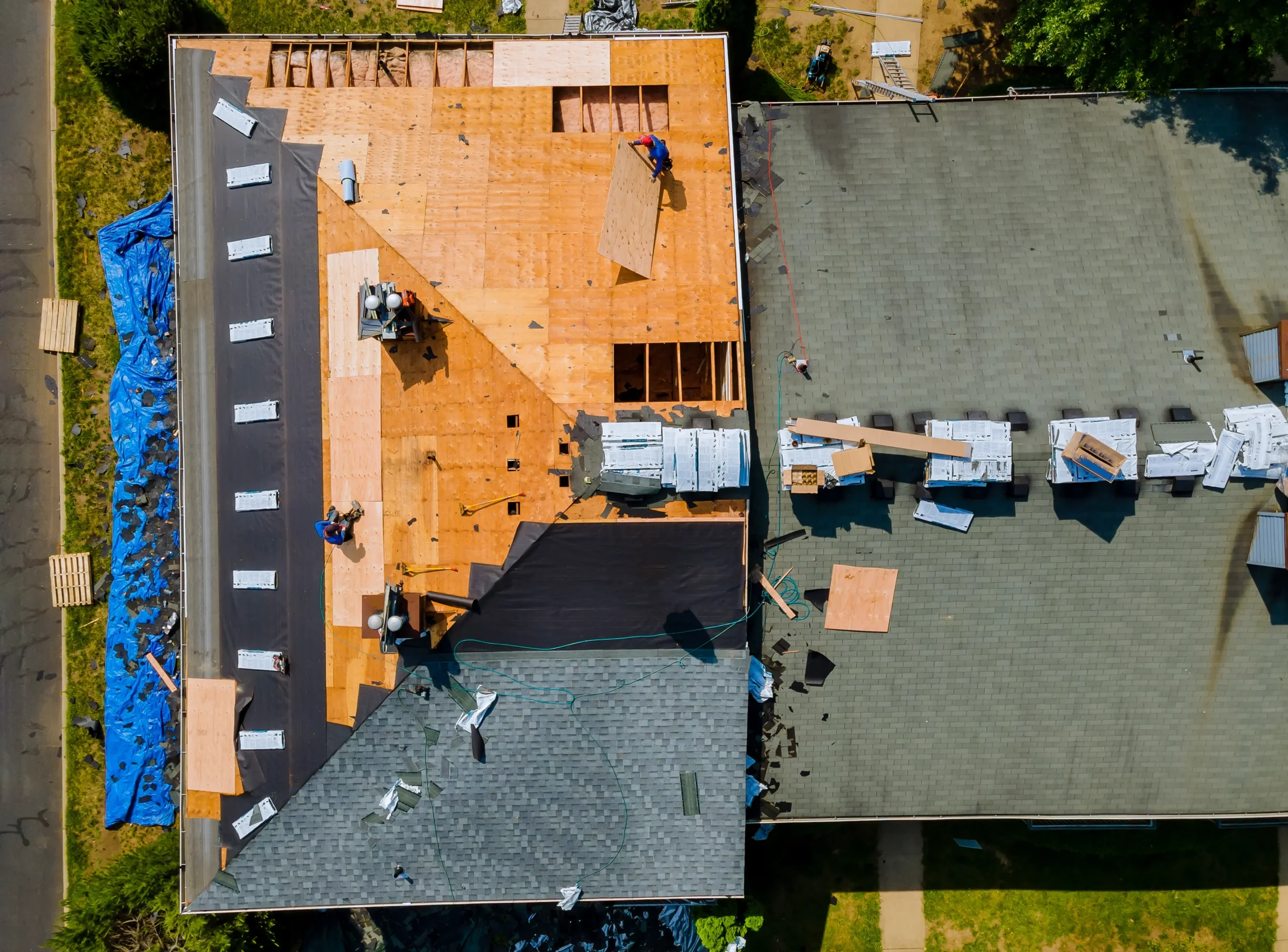
Your roof is the first line of defense for your home. When it starts to fail, the damage works its way into the attic, the walls, the ceiling, and eventually your wallet. Most Connecticut homeowners don't think about their roof until water shows up where it shouldn't. We'll walk through the 5 most common warning signs and when you should call a roofing contractor in Connecticut.
1. Damaged, Missing, or Curling Shingles
Shingles are designed to lay flat against the roof. When you start to see shingles curling at the edges, buckling in the middle, or missing in patches, your roof is sending you a signal. Curling usually means the shingles have absorbed moisture and lost their shape. Missing shingles often follow a windstorm but can also happen as the adhesive layer degrades over time. Either way, the exposed area lets water reach the underlayment and the wood deck below. A Connecticut roofing contractor can walk the roof safely and tell you whether the damage is isolated or part of a larger problem.
2. Sagging Roof or Visible Wear
A roof should look flat or angled in clean lines from any angle. If you notice the roofline starting to dip, sag, or curve in a way that wasn't there before, the structural elements underneath are likely failing. Sagging can mean rotting decking, water saturation, or foundation movement in the framing. In Connecticut's climate, moisture and freeze-thaw cycles take a heavy toll on aging roofs. Once the surface starts to look tired, the protection underneath is usually compromised too.
3. Water Stains and Interior Damage
The clearest sign your roof needs replacement is water inside your home. Brown or yellow stains on ceilings, dark spots in the attic, peeling paint, or damp insulation all point to a roof that's letting water through. The stain you see is rarely directly under the leak — water travels along rafters and trusses. Most roofs in Connecticut last between 20 and 30 years. Once you're seeing recurring leaks, a full roof replacement is usually the smarter financial move.
4. Granules in the Gutters and Higher Energy Bills
Asphalt shingles are coated with granules that protect the surface from UV rays and weather. As shingles age, these granules wash off into the gutters. If you're seeing a lot of granules in your downspouts, your shingles are losing their protective layer. Higher energy bills can also point to roof problems. A failing roof allows heat to escape in winter and cool air to escape in summer. A roofing contractor can check both during a free inspection.
Frequently Asked Questions
Most asphalt shingle roofs in Connecticut last between 20 and 30 years. Metal roofs can last 40 to 70 years. The lifespan depends on the material, installation quality, and maintenance over time.
You can patch a roof if the damage is small and isolated. But if you're seeing multiple warning signs at once, patching is a short-term fix. You'll end up paying for patches plus a replacement.
Costs vary based on size, materials, and complexity. The best way to know is to get a free written estimate from a licensed roofing contractor after an on-site inspection.
Spring through fall is ideal when temperatures are moderate and the weather is more predictable. We schedule projects year-round and plan around weather forecasts.
No. Most homeowners go to work as usual. We'll communicate with you before and after the project, but the work itself doesn't require your presence.